Service · Ceiling system
Stretch ceilings
A stretched membrane for interiors where visual impact, unusual geometry and durability matter — installed cleanly, with no chiselling or dust, usually within a single day.
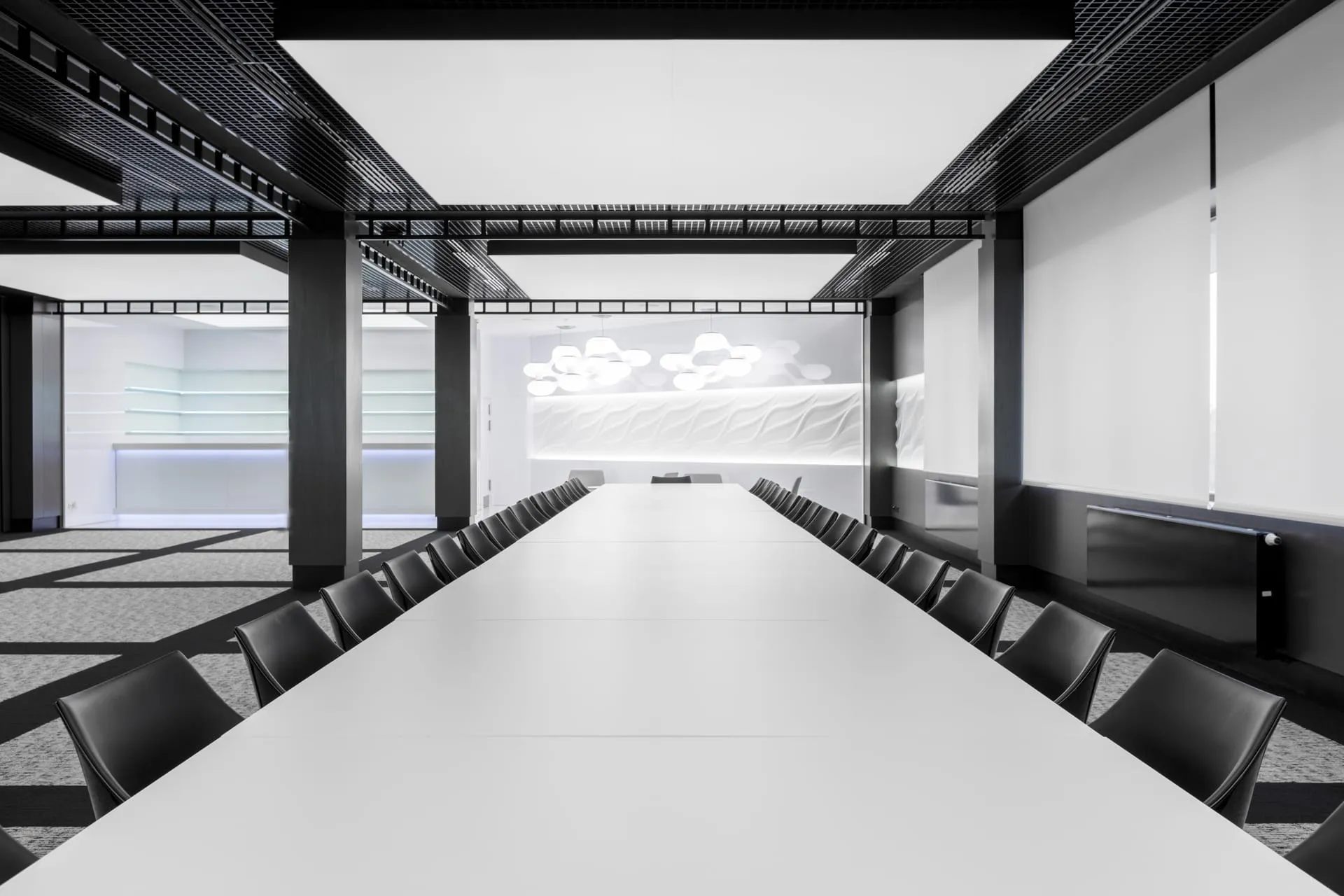
A stretch ceiling is a thin, elastic membrane stretched over profiles fixed around the perimeter of the room, creating a perfectly smooth, seamless surface. It is a type of suspended ceiling in which, instead of panels on a grid, a stretched membrane is used, manufactured exactly to the dimensions of the interior. The solution serves two roles at once: it gives the ceiling a flawless, even appearance while also concealing unevenness in the soffit, cracks and installations routed above the membrane.
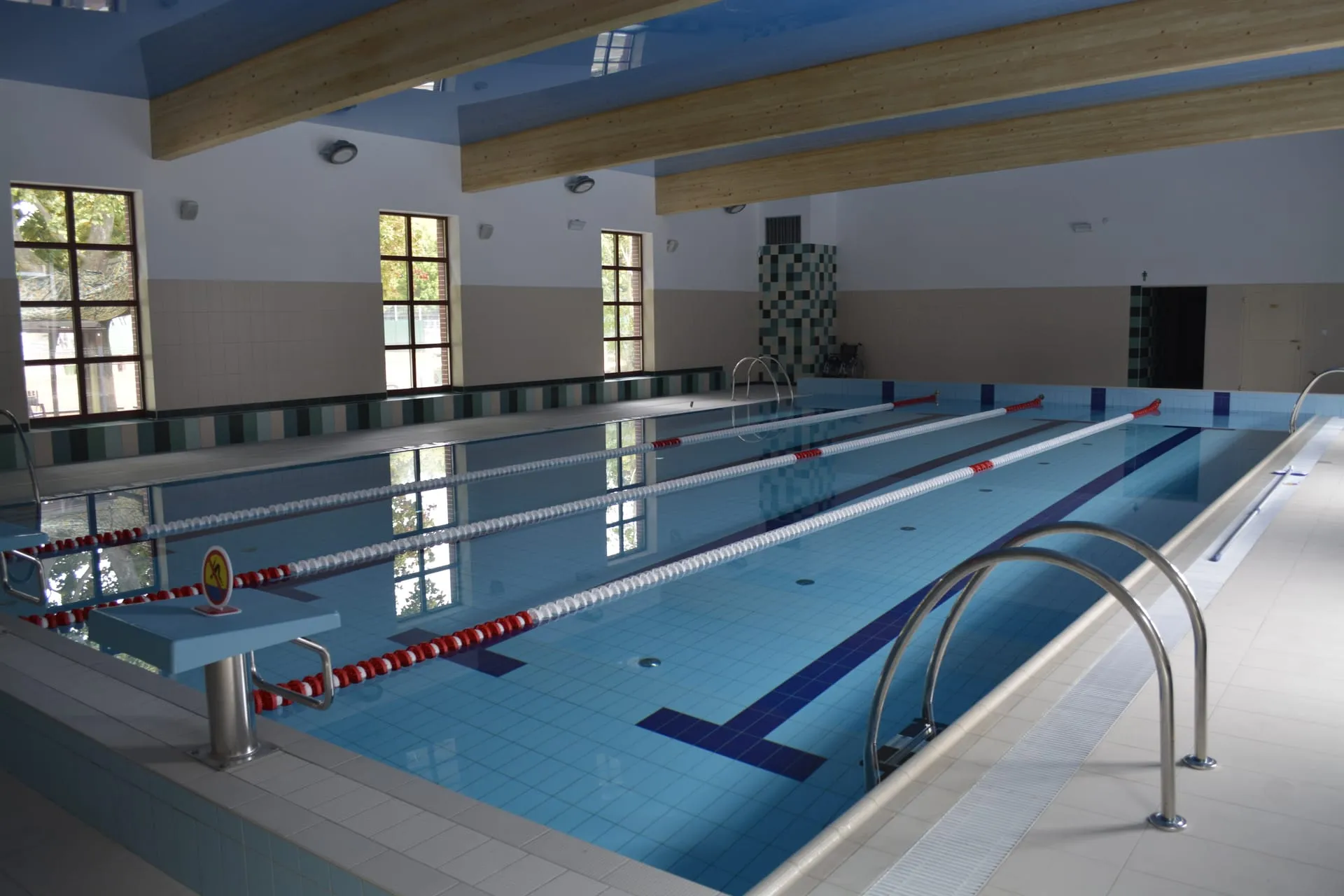
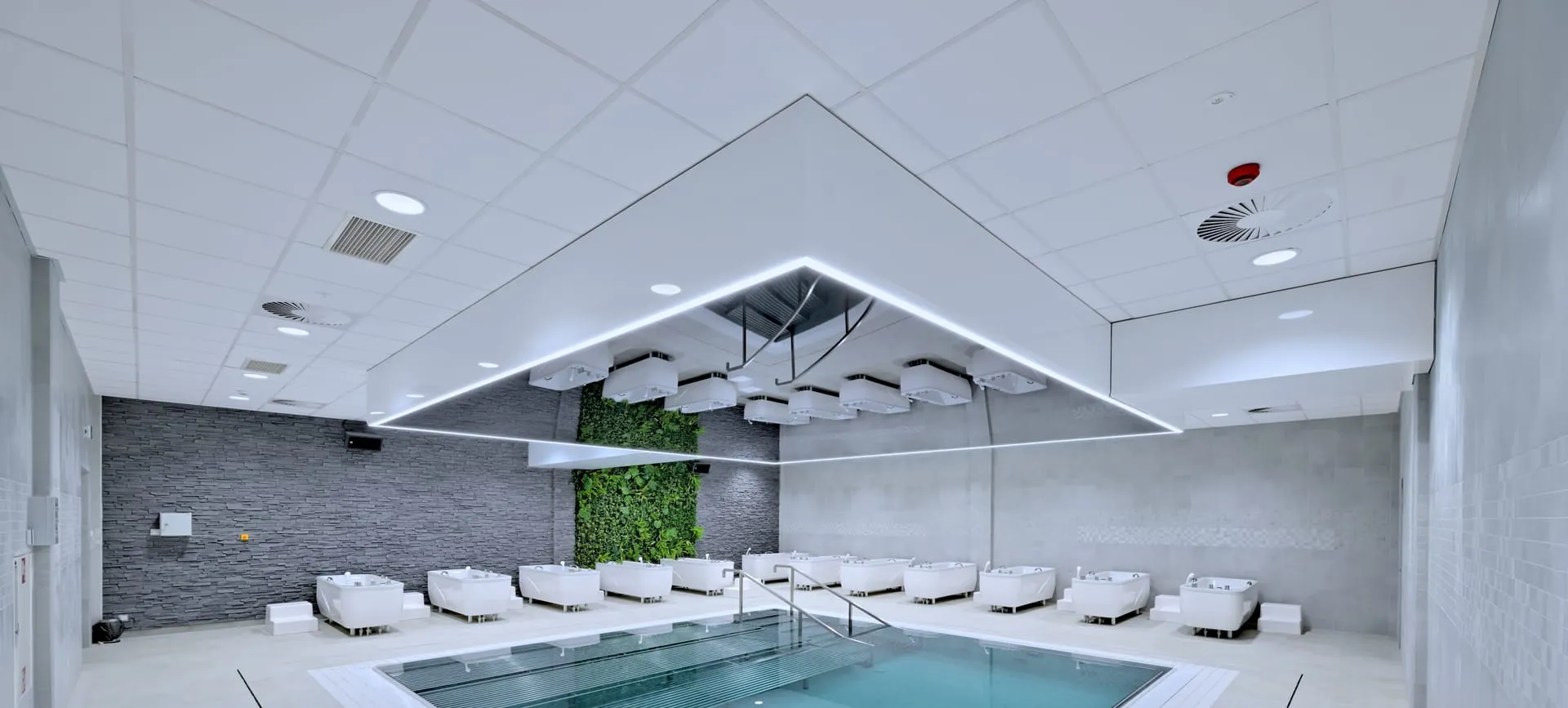
The heart of the solution is the membrane itself — it determines the effect and offers enormous scope for design. The surface can range from a matte finish resembling a perfectly painted ceiling, through satin, to high gloss with a mirror effect. The membrane also accepts virtually any high-resolution print — a printed ceiling can be a single colour, a subtle motif, or a full-format graphic or photograph. Nor does it have to stay flat: plane breaks, level changes and three-dimensional forms create a 3D ceiling, turning the surface overhead into an element of interior architecture.
Example projects
Facilities where we have used stretch ceilings.
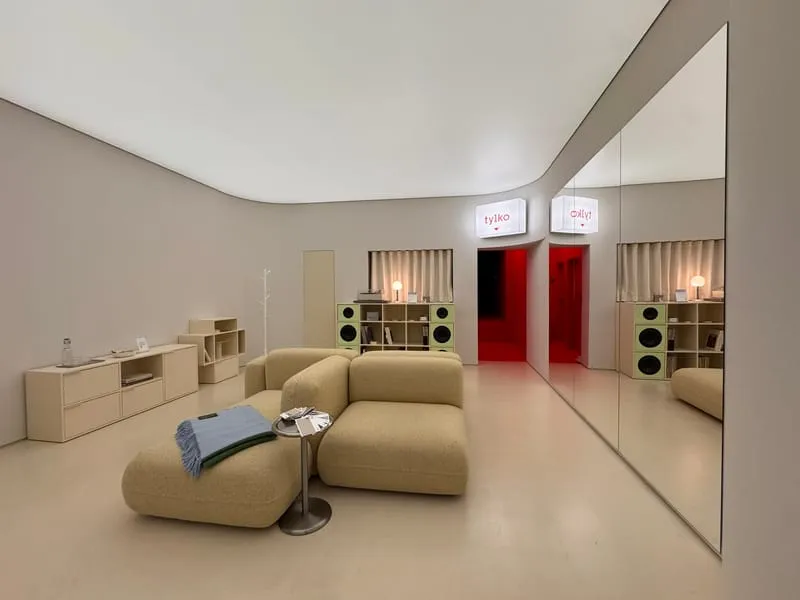
2025
Tylko showroom in Berlin
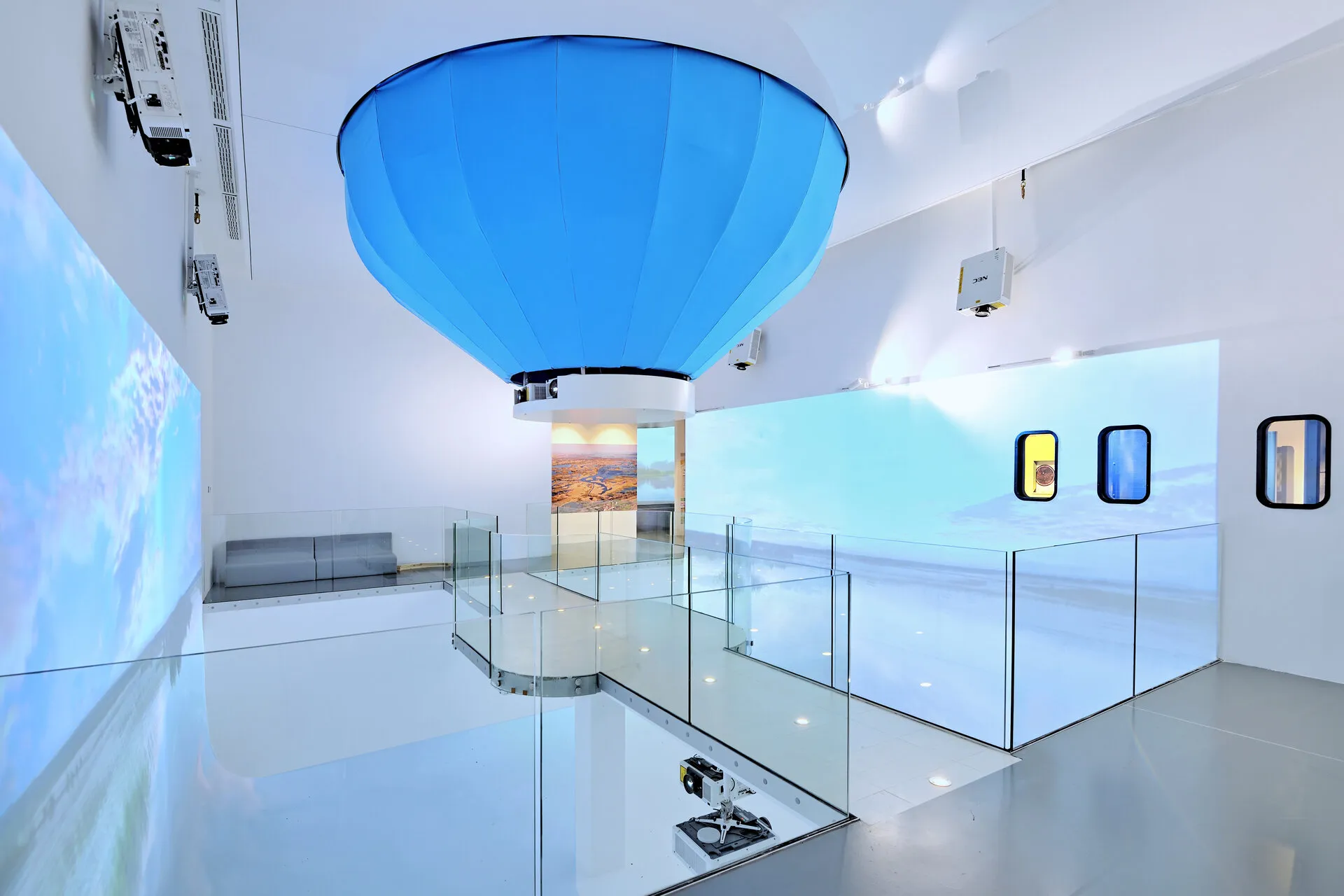
2020
Museum and Education Centre „Ujście Warty”
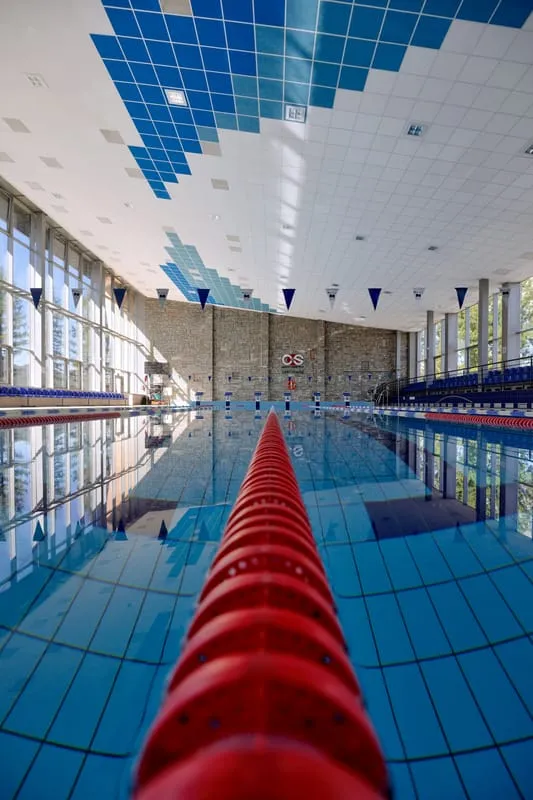
2018
Central Sports Centre in Zakopane
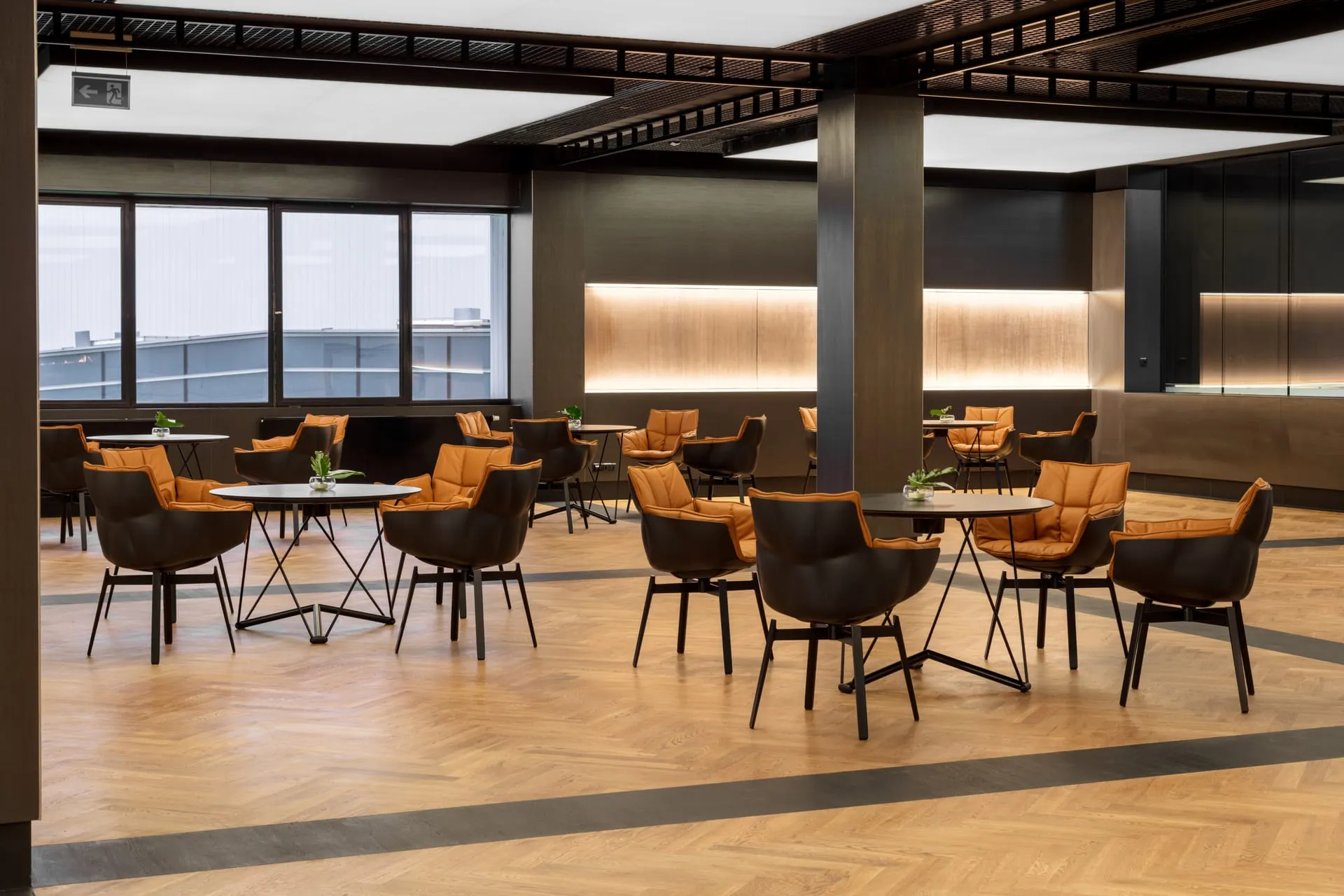
2017
Sala Ognia in the Garden City complex at the Poznań International Fair (MTP)
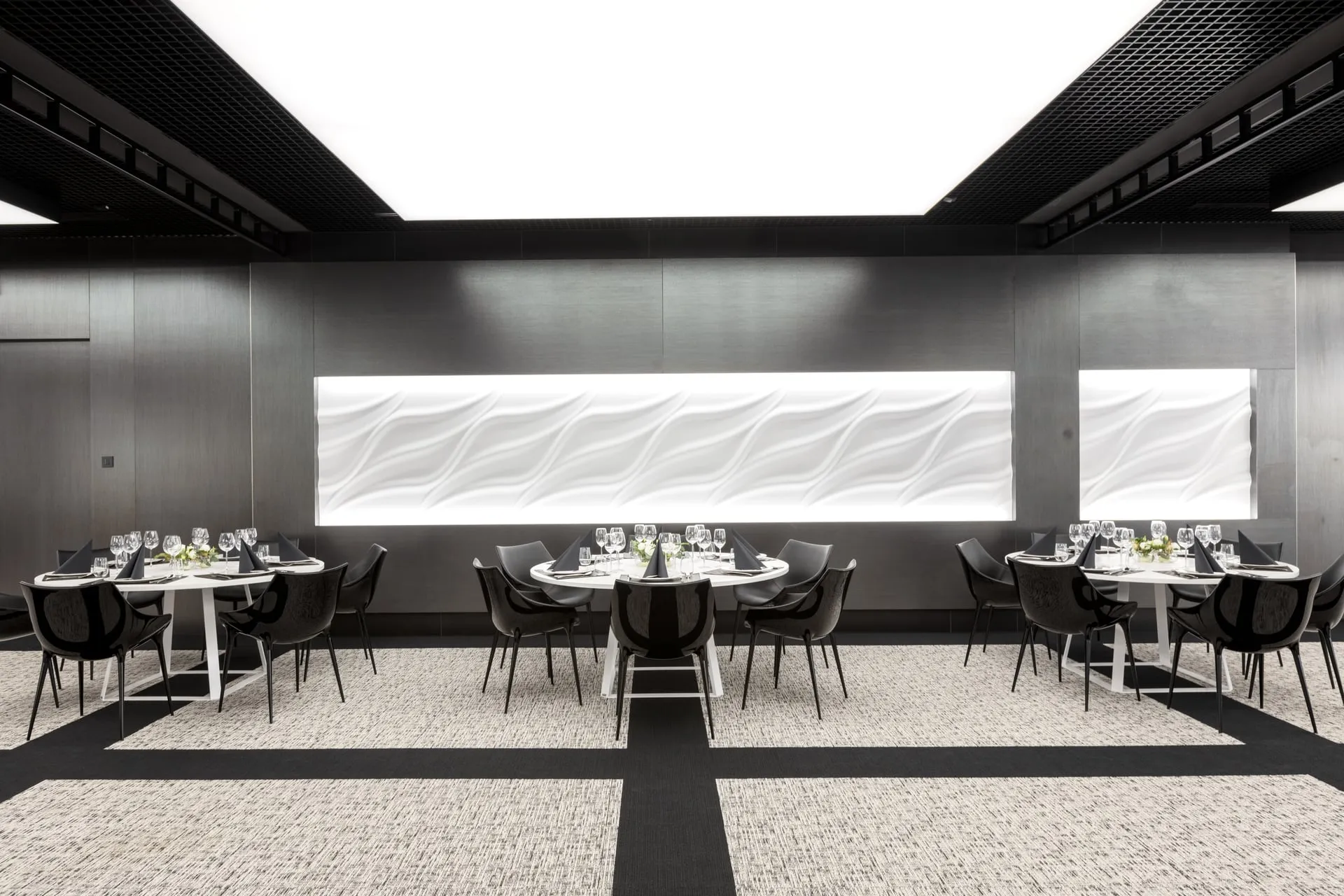
2016
Sala Powietrza in the Garden City complex at the Poznań International Fair (MTP)
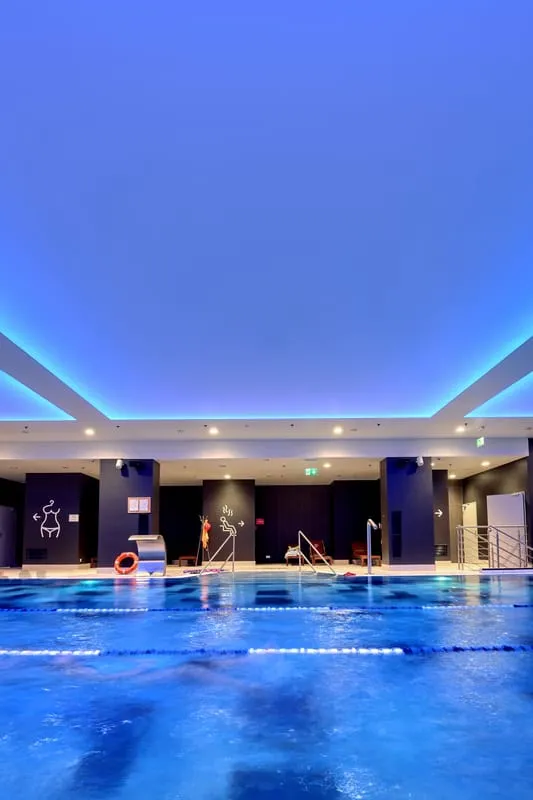
2015
Fabryka Formy Fitness Centre in Poznań
2015
Prison Service Training Centre in Kule
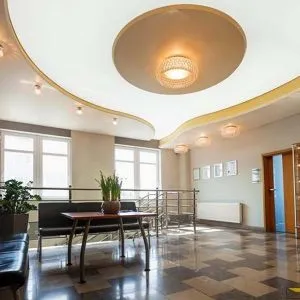
2015
Offices of the MERCUS management board in Polkowice
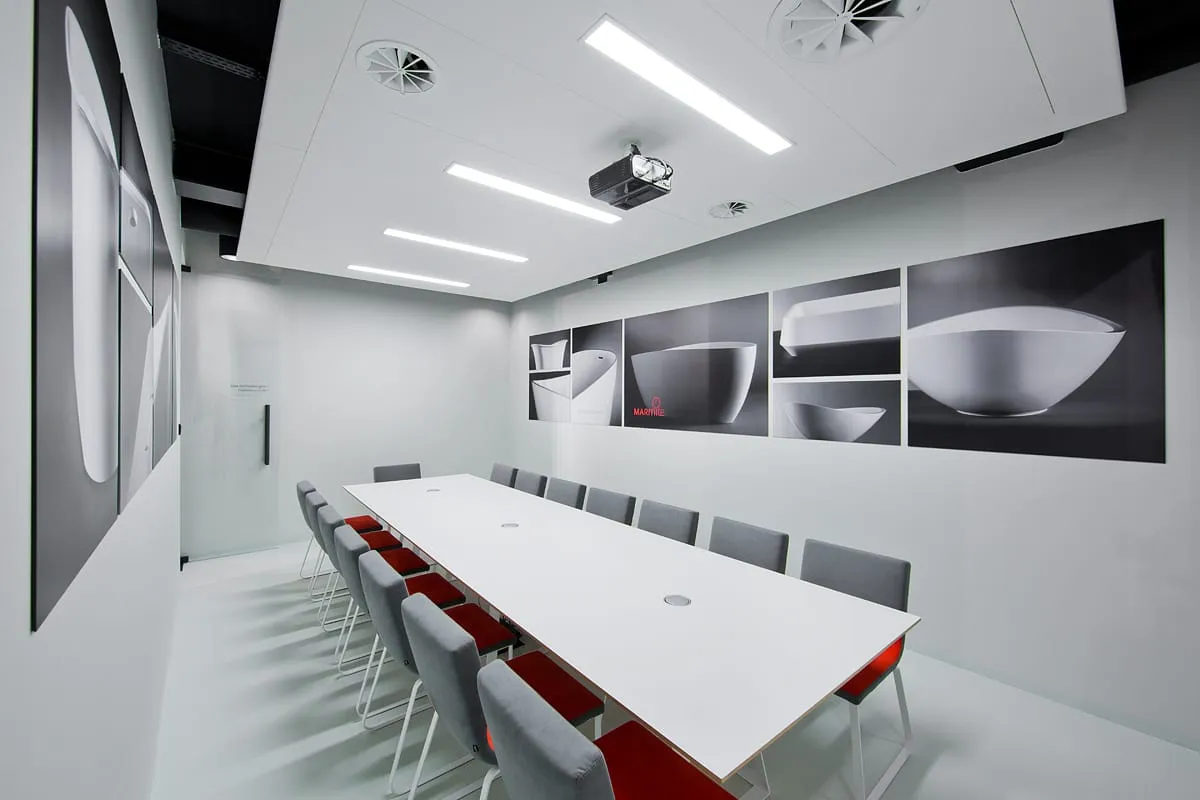
2015
MARMITE Company Headquarters in Zakrzewo
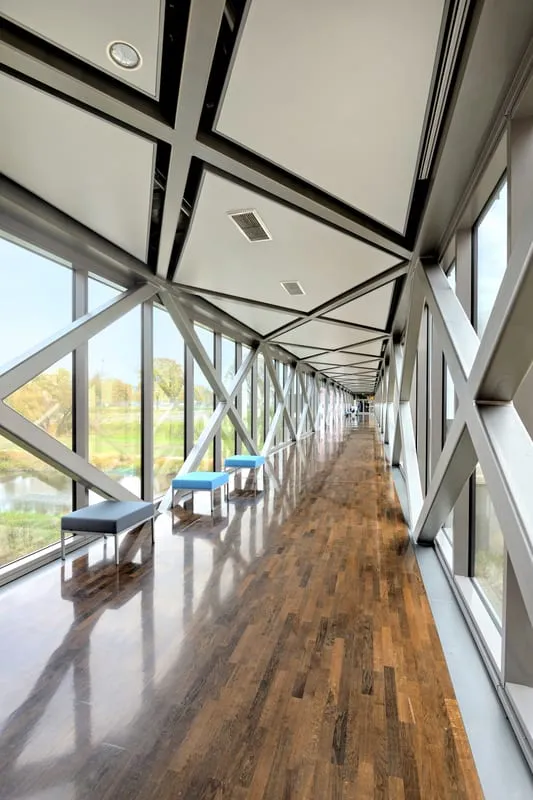
2015
Brama Poznania (ICHOT)
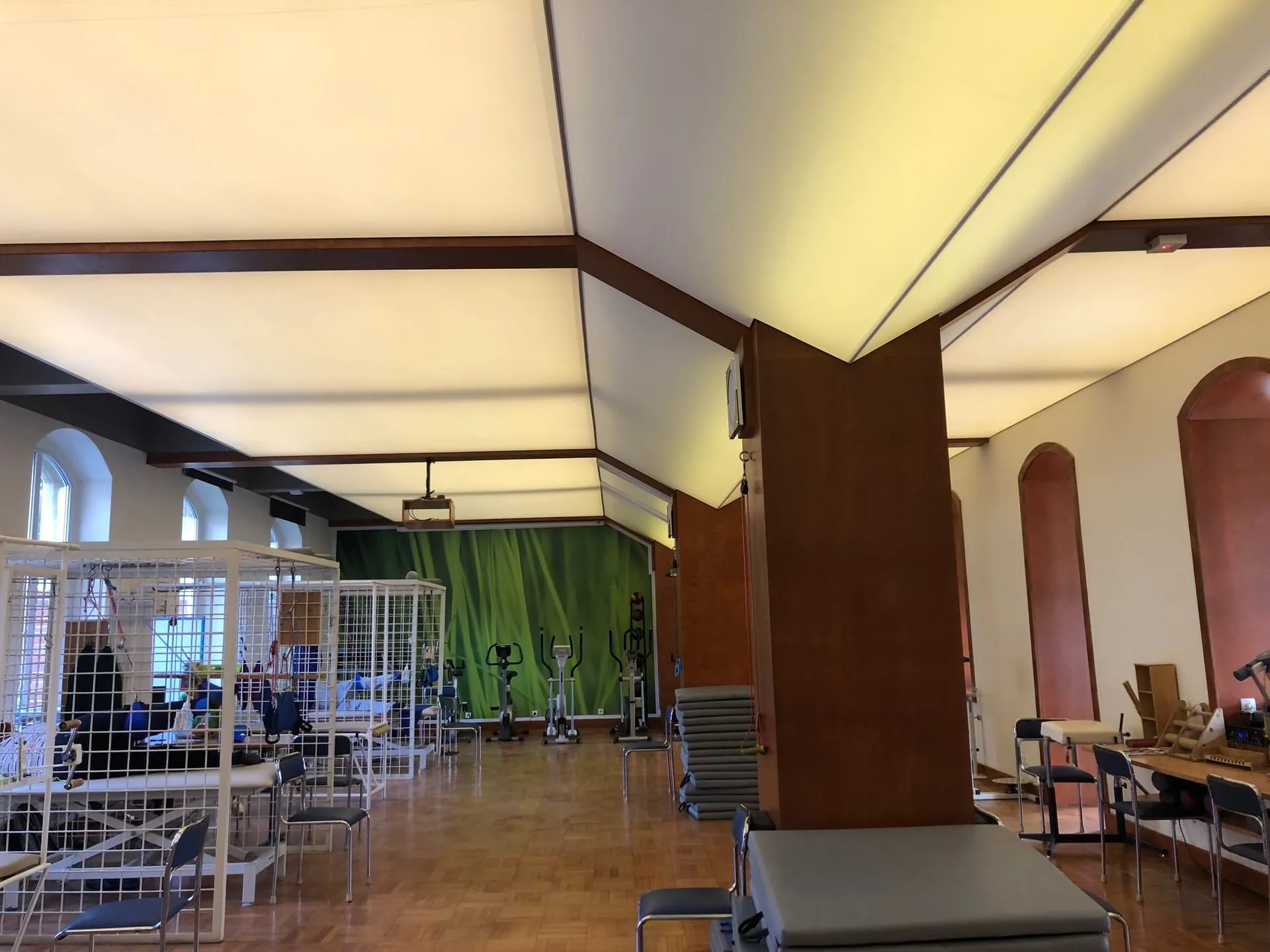
2015
Rheumatology Centre in Śrem
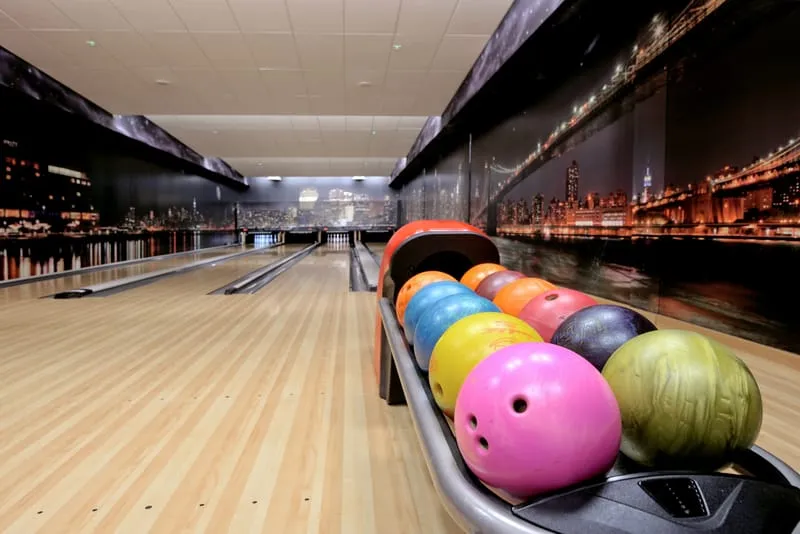
2014
Recreation Centre in Oborniki
Where we apply it
- Apartments and houses
- Hotels
- Offices
- Reception areas
- Bathrooms and kitchens
- Conference rooms
- Representative spaces
- Religious buildings
- Restaurants
Light offers a separate potential — LED light lines can be fitted into the membrane, running exactly where you want them, and a transparent, backlit membrane turns the entire surface into a uniformly glowing light ceiling. A special variant is the acoustic membrane with micro-perforation, which, combined with a sound-absorbing layer hidden above it, begins to genuinely absorb sound — combining a smooth appearance with acoustic comfort.
Stretch ceilings work well in apartments and houses as well as in hotels, restaurants, offices and representative spaces. Their greatest advantages are fast, clean installation — no chiselling, dust or wet works, usually within a single day — and low weight, which does not add load. The membrane copes well with moisture, so it can also be installed in bathrooms or kitchens. The result is a flawlessly even surface that keeps its colour and tension for years without needing painting or renovation — and in the acoustic version, additionally shorter reverberation and noticeably better acoustic comfort in the room.
Najczęściej zadawane pytania
Does a stretch ceiling have to be flat?
No. Although a smooth, uniform surface is most commonly chosen, the membrane can also be run at different levels, used to create plane breaks, curves and three-dimensional forms, and fitted with LED light lines running exactly to the design. As a result, a stretch ceiling is sometimes not just a finish but also an element of interior architecture.
Does a stretch ceiling improve room acoustics?
Not every one. An ordinary, smooth membrane reflects sound similarly to plaster or plasterboard and does not shorten reverberation on its own. Acoustics are only affected by an acoustic stretch ceiling — a membrane with micro-perforation combined with a sound-absorbing layer hidden above it. Only such a setup absorbs sound and reduces echo. It is worth remembering this, as it is a common misunderstanding.
How much height does a stretch ceiling require?
It depends on the intended effect. In the most favourable case — an ordinary membrane without backlighting — around 4 cm is already enough. If the ceiling is to be backlit, the space above the membrane needs to be increased so the light spreads evenly (usually 15–20 cm for a fully glowing surface). Similarly, the acoustic version needs room for the sound-absorbing layer above the ceiling membrane. Even so, a stretch ceiling usually takes up less height than a classic ceiling on a grid, which is an advantage in low rooms.
Is a stretch ceiling always plain-coloured and smooth?
No. A smooth, uniform surface is just one option — the most commonly chosen, but not the only one. The membrane is available in a wide range of colours and finishes (matte, satin, gloss, mirror, transparent), and its surface can carry virtually any print — from subtle motifs to full-format graphics or photographs. It does not have to stay flat either: it allows plane breaks, level changes and three-dimensional forms, as well as fitted LED light lines or backlighting of the entire surface. As a result, the ceiling can be either a calm, neutral backdrop or the main decorative feature of the interior.
Does the membrane have visible seams?
It depends on the film chosen. Some membranes can achieve up to 5.4 m of even surface without a visible seam, so a typical room is usually closed off with a single, seamless sheet cut to size. A seam only appears on surfaces wider than the available film width — sections are then welded together, forming a thin seam. On matte and satin finishes, the weld is practically invisible, while in the transparent (backlit) version it can sometimes be seen against the light, which is why the layout of seams on large glowing ceilings is planned already at the design stage.
Is it easy to damage, and how is it cleaned?
The membrane is durable and, under normal use, lasts for years without cracking or discolouring — film manufacturers usually provide a 10–15 year warranty. It remains sensitive to punctures and cuts from sharp objects, however — worth keeping in mind, for example, when carrying a ladder. It is easy to clean: with a soft cloth and a mild cleaning agent, without harsh chemicals.
Is a stretch ceiling safe in terms of fire protection?
Yes. The membranes used are flame-retardant — in the DIN 4102 classification this corresponds to class B1, and in the Euroclasses (PN-EN 13501-1) usually B-s2,d0, with the best membranes reaching B-s1,d0, the highest class available for stretch ceilings. In practice, the membrane does not sustain combustion (it is self-extinguishing) and, which is particularly important for evacuation safety, does not drip flaming droplets (class d0) and emits little smoke (s1). In addition, in everyday use it is characterised by very low emission of volatile substances (class A+).
Can the membrane be used for purposes other than the ceiling?
Yes — the same stretched film is not limited to the ceiling. It is also used on walls, as stretch wall cladding and wall panels — smooth, printed, or in an acoustic version with micro-perforation. It also works great as backlit panels and light boxes, light islands or large-format decorative graphics. The film is also used to create three-dimensional forms, islands and 3D elements, and even backlit advertising panels or self-supporting decorations. This makes it possible to combine ceiling, walls and light coherently in a single, repeatable system — and, in the micro-perforated version, to extend acoustic adaptation from the ceiling to the walls as well.
PVC membrane or technical fabric — what is the difference?
The films used fall into two families. The PVC membrane (film) is installed using heat — during installation it is warmed up and, as it cools, stretches perfectly taut; it offers the widest choice of finishes: matte, satin, gloss, mirror and transparent versions for backlighting. Technical fabric is installed cold, without heating the room, and works well on very wide surfaces, reducing the number of seams. The choice of film depends on the desired effect, the room's dimensions and the installation conditions — we advise on this at the design stage.
Does a stretch ceiling give off a smell after installation?
A freshly installed PVC membrane may have a mild smell for the first few days — this is normal and disappears on its own once the room is ventilated. The films used are characterised by very low emission of volatile substances (class A+), which makes them suitable for bedrooms and children's rooms too. Membranes made of technical fabric, installed cold, are practically odourless from day one.
How can an uneven soffit, cracks or installations under the ceiling be hidden?
This is one of the most common uses of a stretch ceiling. The membrane is stretched on profiles below the existing soffit, so unevenness, cracks, old finishes or cables disappear completely from view — without chiselling, plastering or painting. As little as around 4 cm of drop is enough, and installation is clean and usually completed within a single day. It is also a fast way to renovate a ceiling after water damage or in older buildings.
What determines the price of a stretch ceiling?
Prices start from PLN 175/m², excluding VAT. The biggest factors affecting the final price are: the surface area and geometry (3D forms and multi-level ceilings are priced higher than a single smooth sheet), the type of film and finish (matte, gloss, transparent, printed), and extras — LED backlighting, fitted light lines, or the acoustic variant with a sound-absorbing layer. The number of cut-outs also matters: light fittings, sensors and other elements fitted into the sheet. We prepare the quotation individually, based on the design or an on-site measurement. All prices given are indicative — the final price always depends on the building, the fixing system and the substructure.