Service · Ceiling system
Timber ceilings and panels
The warm, natural character of timber combined with genuine acoustic performance — perforated panels, louvres and battens for ceilings and walls, in any timber species, combining comfort and aesthetics.
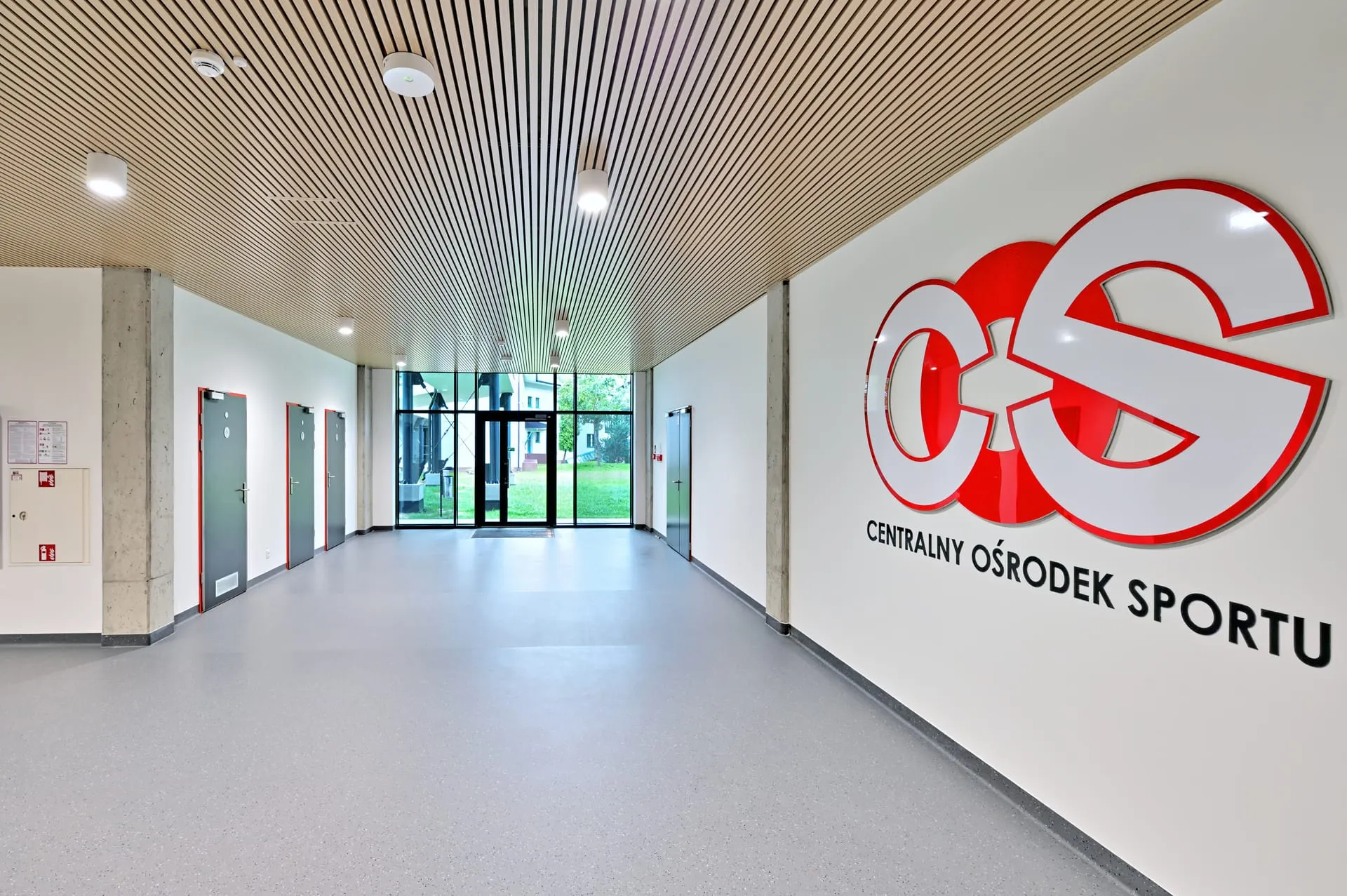
Timber ceilings and panels are finishing systems made of wood or wood-based materials — in the form of panels, louvres, battens or cassettes — installed both below the soffit and on walls. They combine two things that rarely go together: a prestigious, warm interior appearance and effective acoustic adaptation. They are chosen wherever the finish needs not just to perform, but to give the space character.
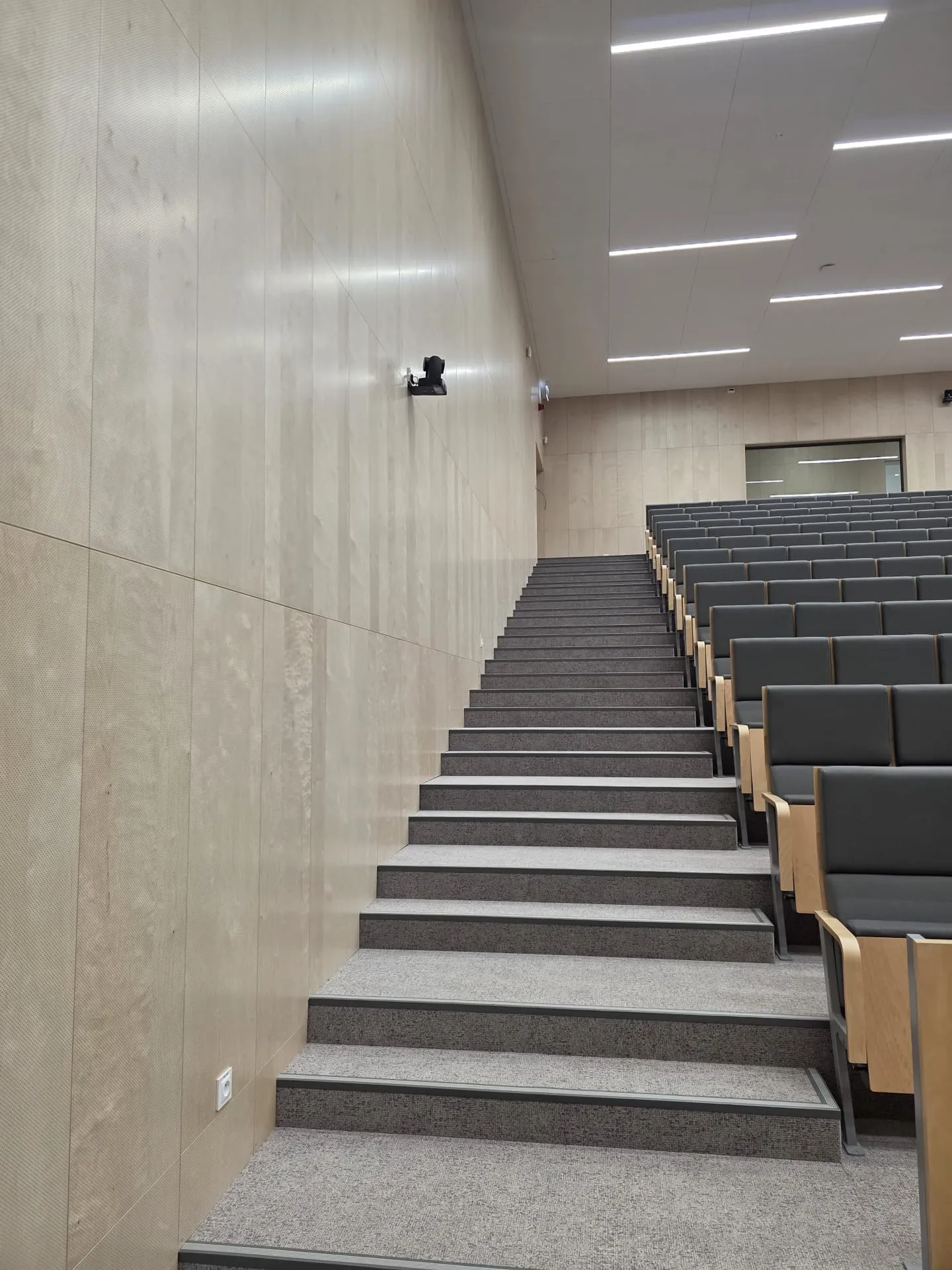
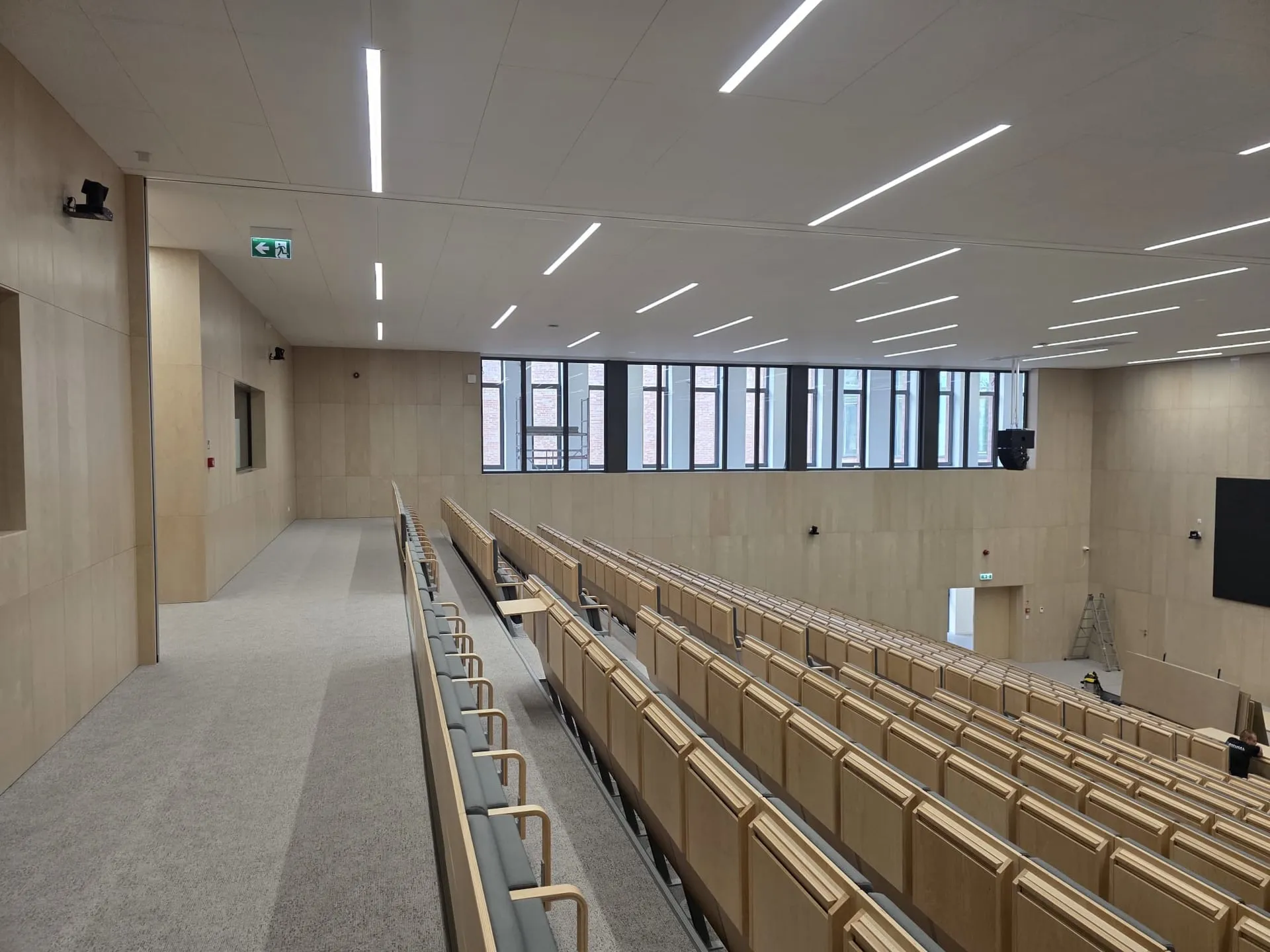
Wood on its own does not absorb sound — it reflects it like any hard surface. The acoustic function comes from perforation or slots in the panel face, an acoustic fleece on the underside and a layer of mineral wool concealed behind it. There is a choice of perforated panels, louvres and battens in various profiles, as well as cassettes — with a surface of natural veneer or veneer foil, from light oak to dark exotic species. The same system is used on the ceiling and on the walls, so both planes form a coherent whole. In addition, based on the acoustic design, damping materials of a suitable thickness can be concealed in the space behind the panel — reinforcing absorption without any change to the interior's appearance.
Example projects
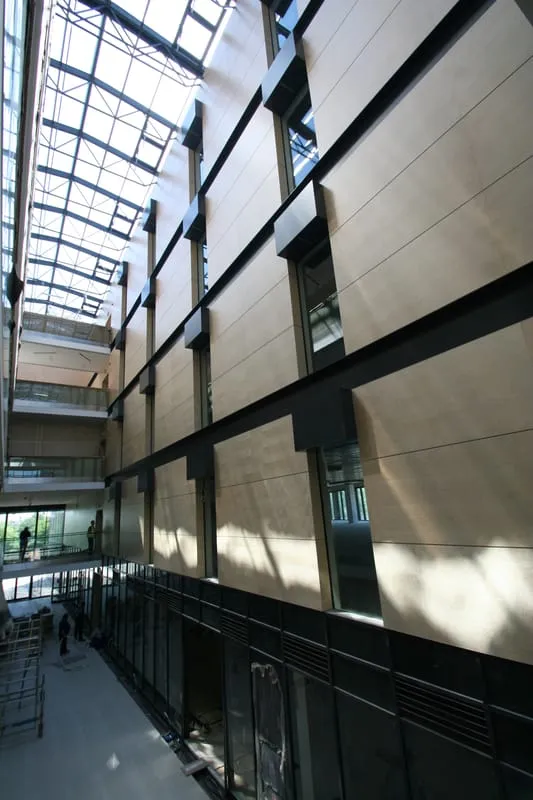
Facilities where we have used timber ceilings and panels.
Where we apply it
- Conference rooms
- Auditoria and assembly halls
- Foyers and reception areas
- Hotels
- Cultural venues
- Religious buildings
- Prestigious offices
- Concert halls
- Modern houses and apartments
- Restaurants
Timber proves itself wherever prestige and comfort matter: conference rooms, auditoria, foyers and reception areas, hotels, restaurants, cultural and religious buildings, and modern homes. The benefit is twofold — the interior gains a warm, natural expression, while reverberation time is genuinely reduced and speech intelligibility improved. This also has a practical side: in many interiors, the acoustic target cannot be met by the ceiling alone, because a significant share of reflections occurs horizontally, between the walls. Wall panels close the acoustic loop, and when executed in the same design as the ceiling, they create a unified, deliberately designed space.
Najczęściej zadawane pytania
Does timber improve acoustics?
Only in the acoustic version. A smooth, solid board reflects sound. Absorption only comes from perforation or slots in the panel face combined with a fleece and a layer of mineral wool hidden behind it — only then does sound pass through the surface and get damped. A “timber look” alone, therefore, does not yet mean acoustic performance.
What is the difference between perforated panels and louvres?
Perforated panels are boards with a regular pattern of holes or slots — giving a calm, continuous surface. Louvres are individual battens installed with gaps between them, through which sound reaches the absorber behind; the effect is more rhythmic and spatial. Acoustically, both solutions can be equally effective — they differ mainly in appearance.
Is it worth treating both the ceiling and the walls, or is the ceiling alone enough?
In many interiors, the ceiling alone is not enough, because a significant part of the sound is reflected horizontally, between the walls — and the ceiling simply cannot “see” that. Wall panels close the acoustic loop and allow the intended effect to be achieved. There is also a visual bonus: the same design on the ceiling and walls creates a coherent, deliberately designed interior. We determine the right split through the acoustic design.
Is this real wood?
The surface is usually made of natural veneer (a thin layer of real wood) or a high-quality veneer foil, bonded to a stable base of MDF or plywood. This solution is more durable and less prone to material movement than solid wood, while still looking natural. Solid-timber panels are also possible, though less commonly used.
What species and finishes are available?
Practically any — from light oak, ash and maple, through walnut, to dark exotic species, as well as stained and lacquered finishes. Wood-look veneer foils are also available, visually faithful, more affordable and more durable. The perforation pattern or louvre spacing is selected separately, so the look can be precisely matched to the project.
How much does a timber ceiling cost?
Prices start from PLN 700/m², excluding VAT. The final price is determined mainly by: the form (veneered panels, louvres, perforated acoustic panels), the wood species and finish, acoustic and fire-safety requirements, and the area, geometry and installation height. We prepare the quotation individually, based on the design or an on-site measurement. All prices given are indicative — the final price always depends on the building, the fixing system and the substructure. If you like the look of wood on a lower budget, take a look at metal ceilings in a wood-look finish.
Is timber safe from a fire-protection standpoint?
Wood-based panels usually achieve class B-s1,d0 (a flame-retardant material with limited smoke emission) — lower than mineral wool (A1/A2), but sufficient for most applications. In buildings with stricter requirements, panels with fire-retardant impregnation are used. We always verify the required class at the selection stage.
Is timber suitable for damp rooms?
Not really. Wood and wood-based materials move under the influence of moisture — they can warp and lose dimensional stability — so for swimming pools, showers or wet rooms, metal systems or moisture-resistant boards are the better choice. Timber is a solution for dry interiors.
Is access to installations above the ceiling possible?
It depends on the system. Panels mounted on a modular grid, as well as louvres, usually allow a single element to be removed to reach the space above the ceiling. Bonded or permanently fixed solutions, which give a uniform surface, limit accessibility for revision — so if access to installations matters, we agree this already at the system-selection stage.