Service · Specialist systems
Sacred building acoustics
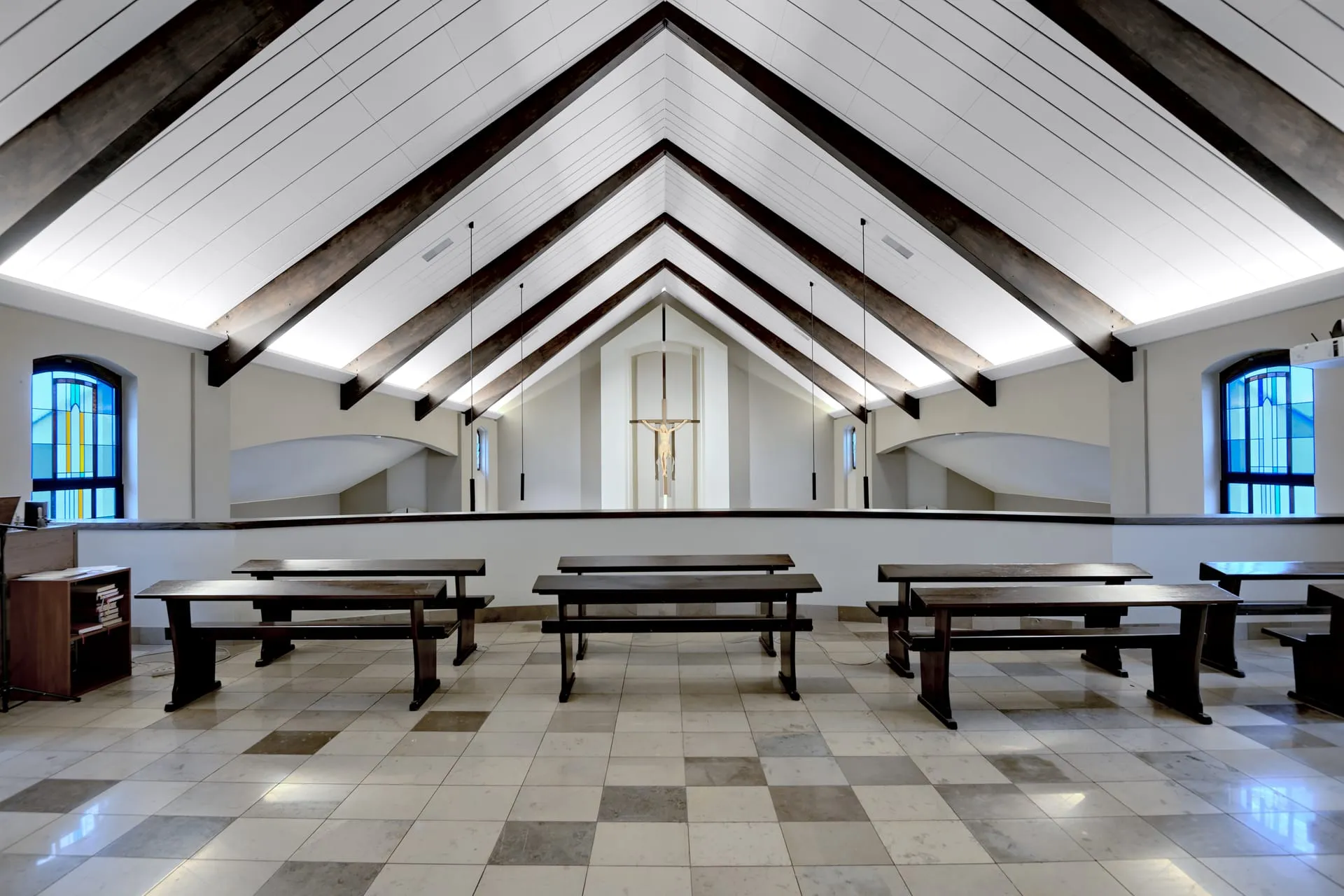
We restore speech intelligibility in churches and chapels — discreet acoustic elements that shorten reverberation without robbing the organ and singing of their sound.
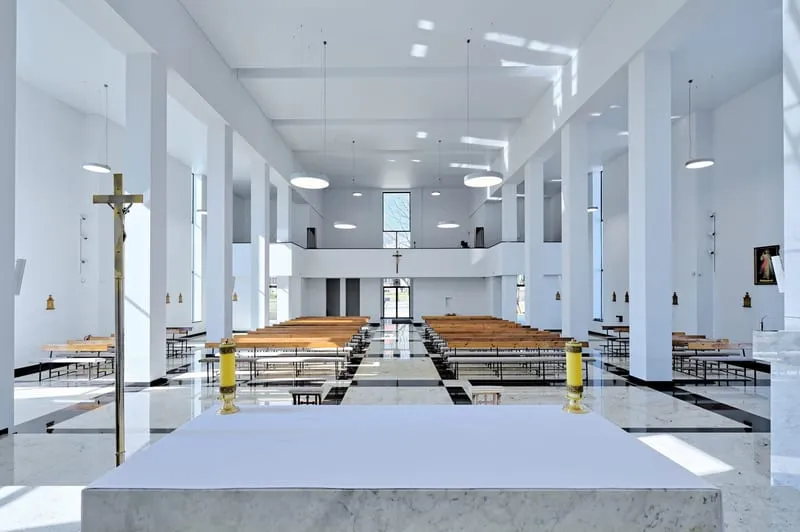
Sacred building acoustics means the acoustic adaptation of churches, chapels and cathedrals, aimed at intelligible speech while preserving the natural sound of the organ and liturgical singing. These are interiors with large volumes and hard, reflective surfaces — stone, plaster, glass — where reverberation time can be long enough to make spoken words unintelligible. We select and install panels and sound-absorbing elements in locations that are acoustically effective and visually discreet, so as to reduce reverberation in the speech band without compromising the interior's heritage character.
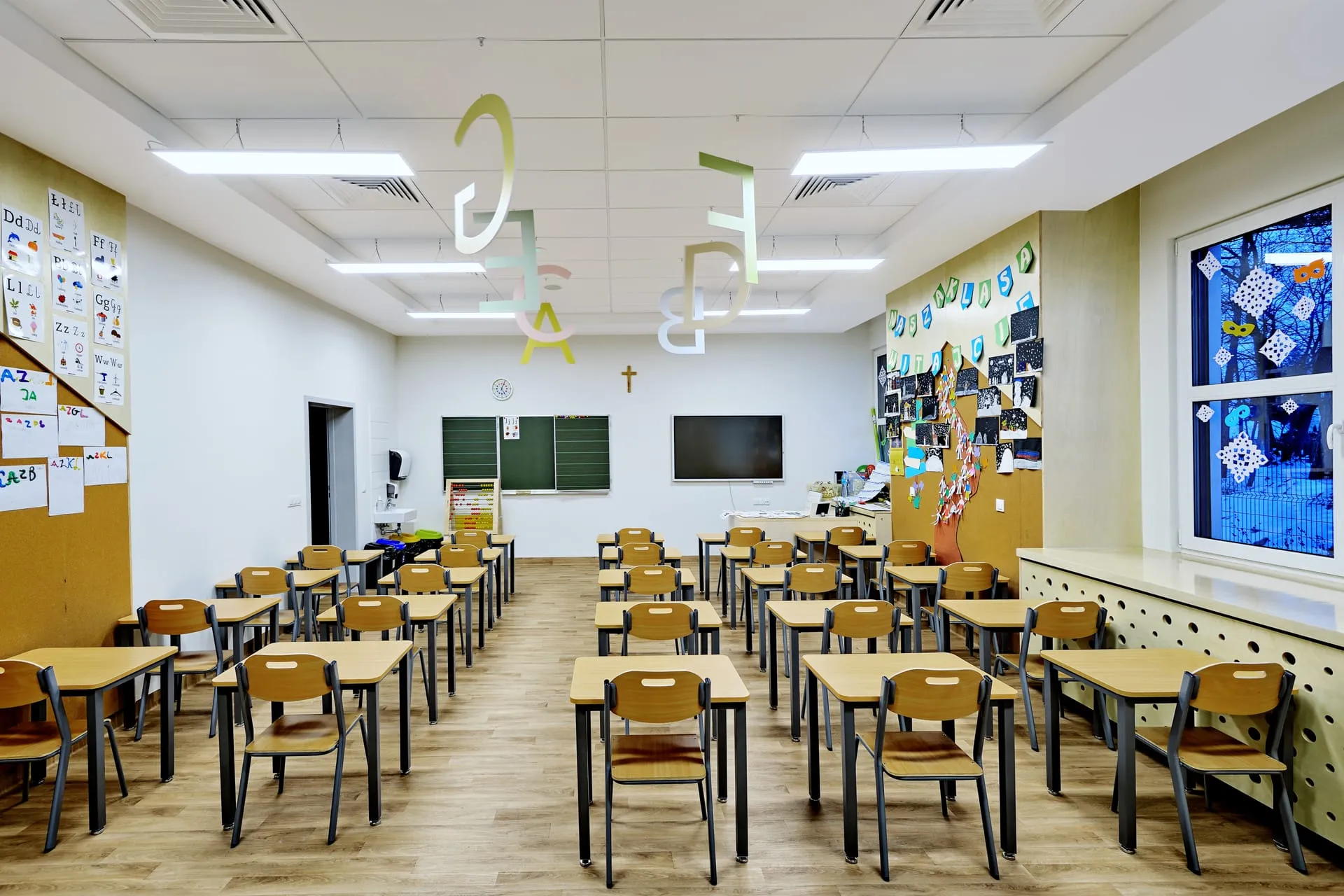
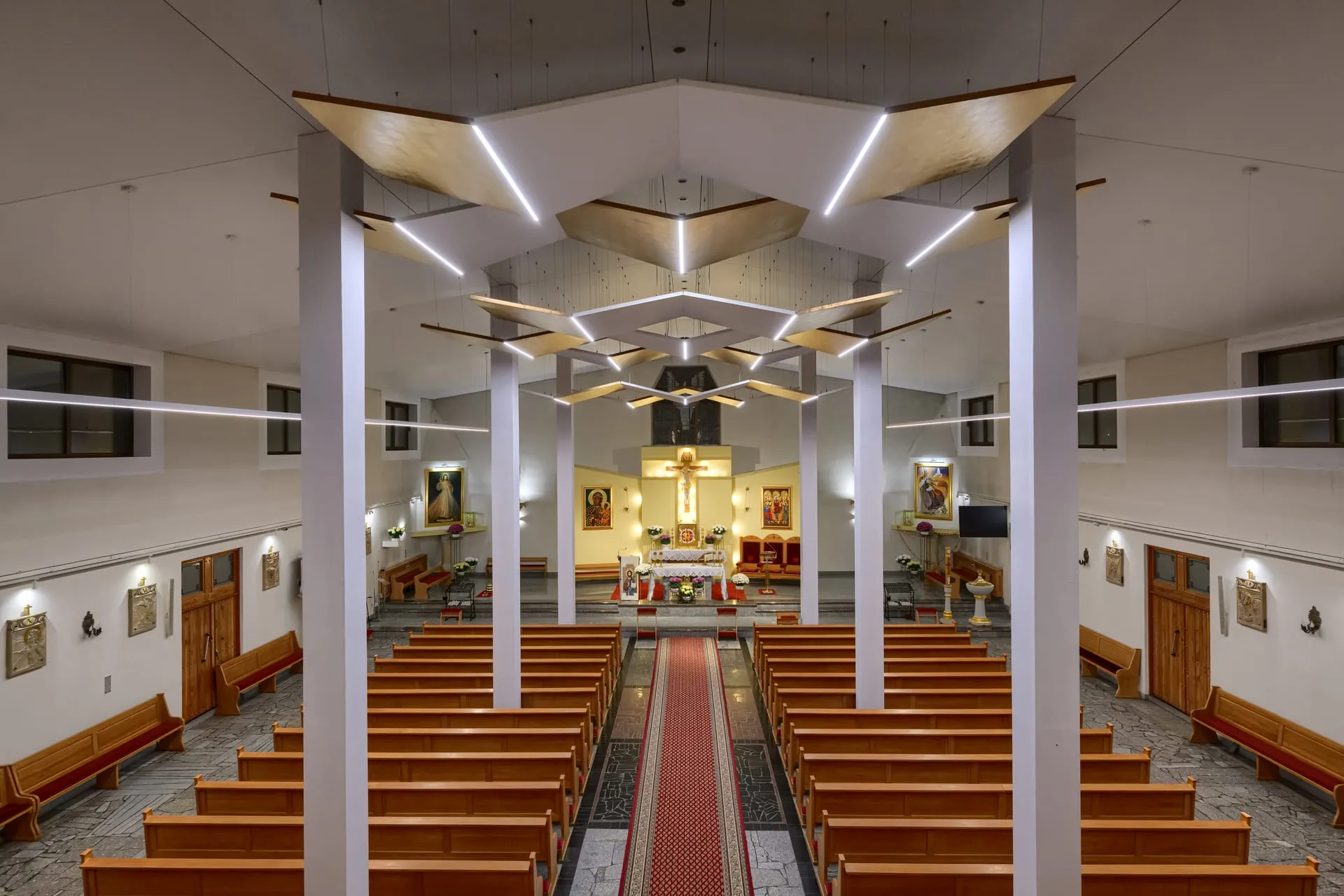
Every project is preceded by measurement or acoustic analysis, because over-damping robs the organ, choir and liturgical music of their sound. The goal is a balance: intelligible speech during the liturgy and homily while preserving the full sound during singing and instrumental performance. We work from conservation documentation and in coordination with the sound reinforcement system.
Example projects
Facilities where we have used sacred building acoustics.
2026
Church of the Blessed Five Martyrs of Poznań in Dębiec
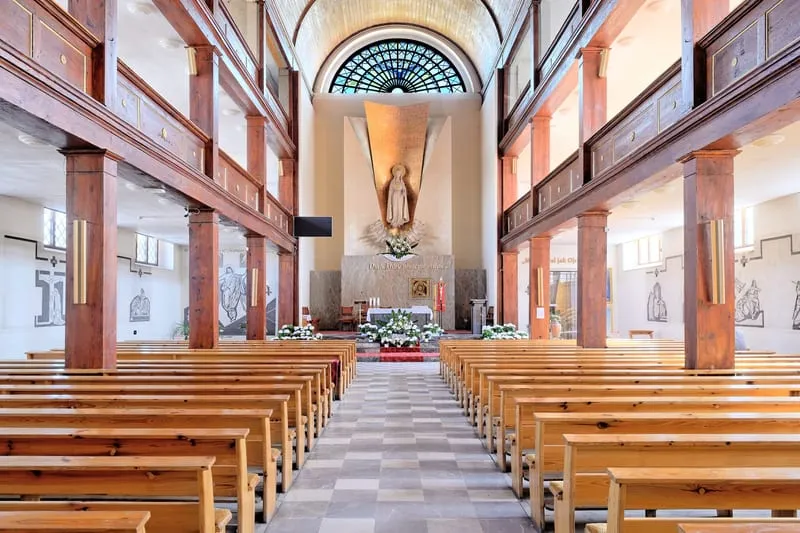
2015
Church of the Immaculate Heart of Mary in Międzychód
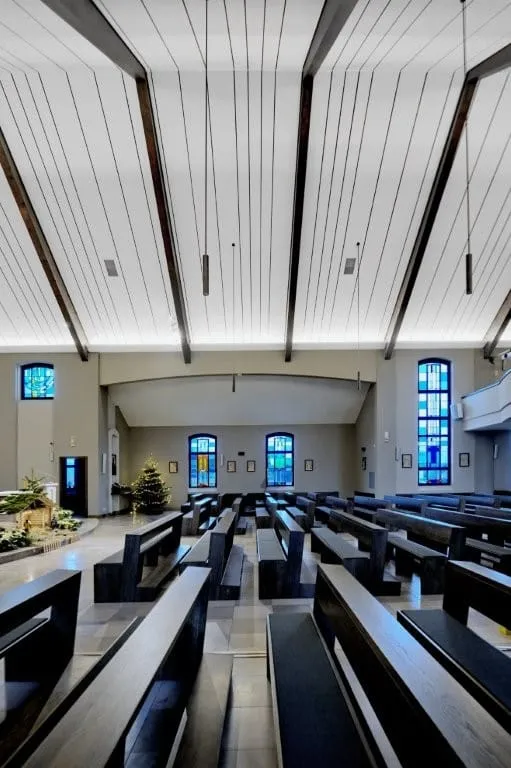
2015
Parish Church of St John XXIII in Wiry
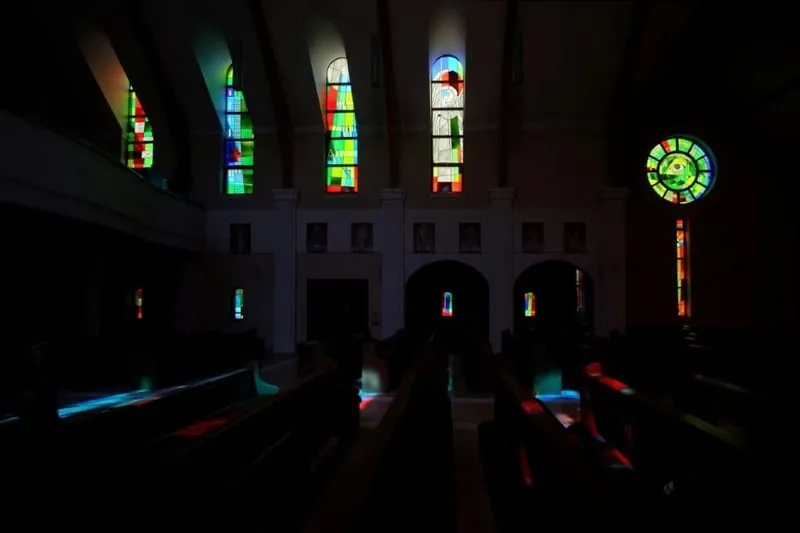
2015
Church of St Padre Pio of Pietrelcina in Strzeszyn Grecki
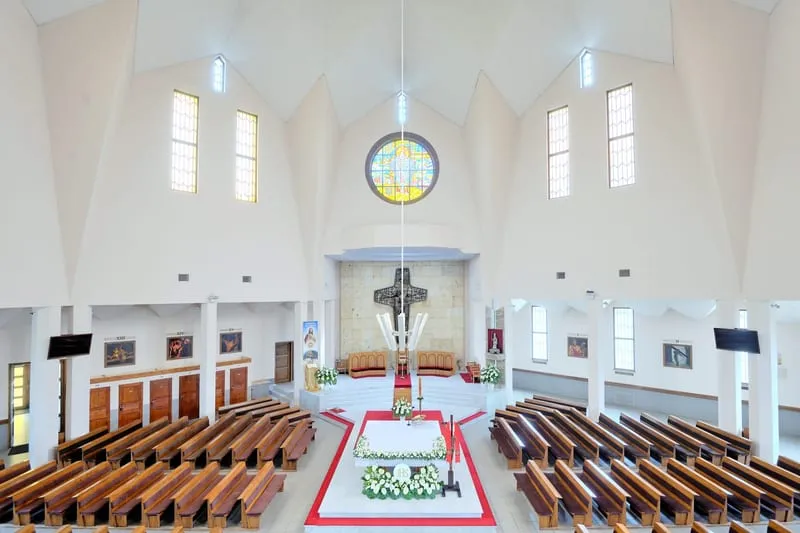
2015
Radzim Gaudenty Church in Gniezno
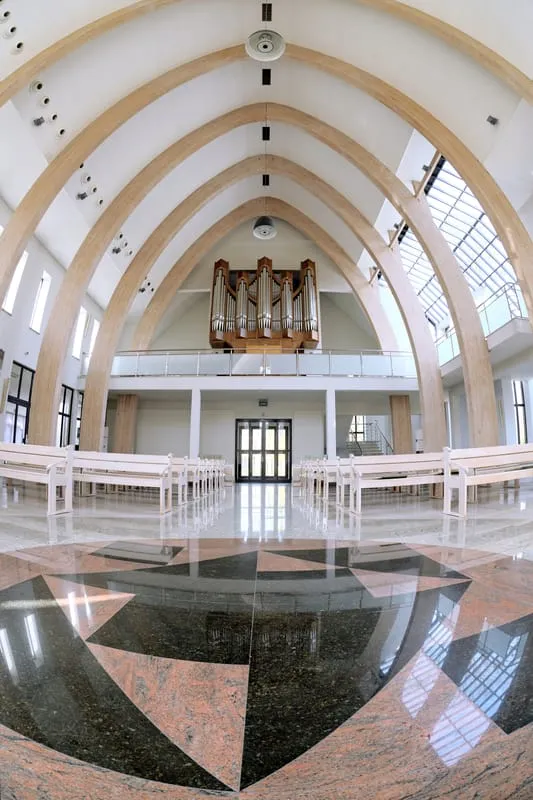
2015
Evangelical-Augsburg Church in Poznań
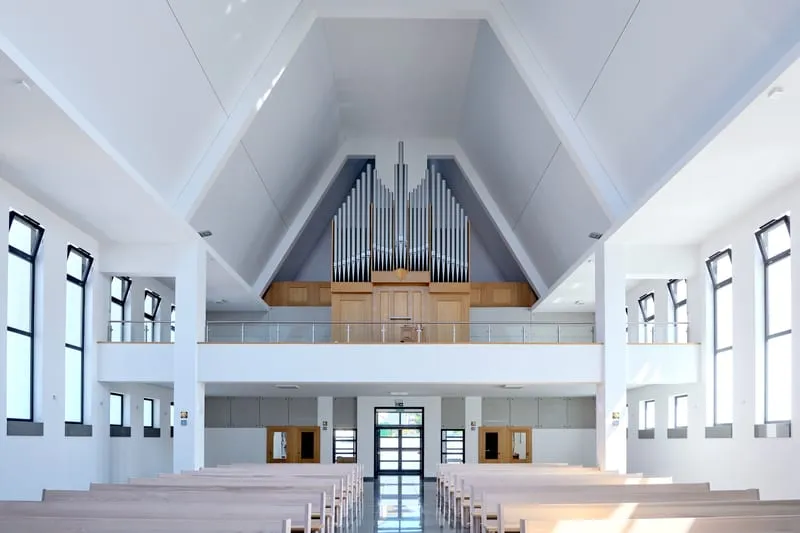
2015
Church of St John Paul II in Naramowice
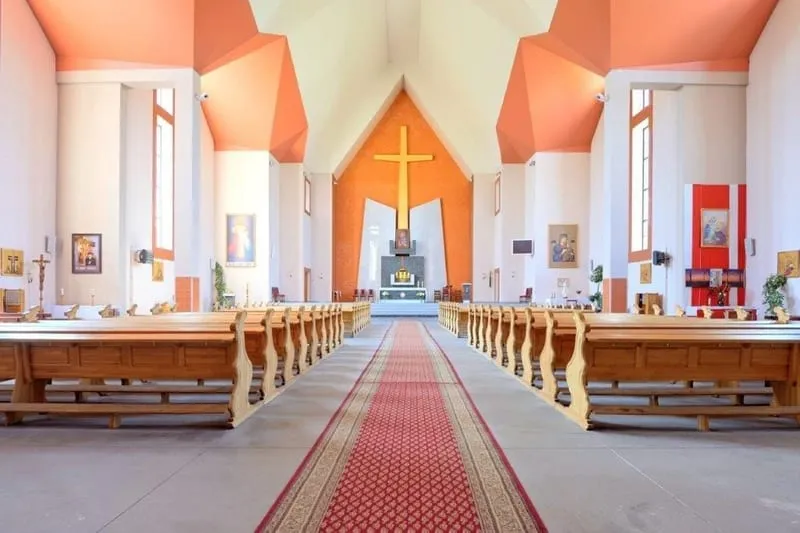
2015
Church of Blessed Michael Kozal in Janikowo
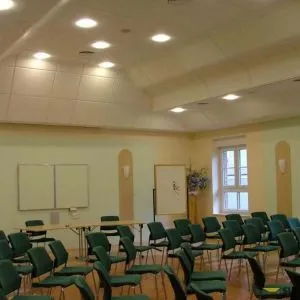
2015
Mission and Retreat House of the Missionaries of the Holy Family "Nazaret" in Bąblin
Where we apply it
- Parish churches and cathedrals
- Chapels and funeral chapels
- Monasteries and religious houses
- Funeral homes and ceremony halls
- Historic sacred interiors
Sacred interiors are an area where we bring together all our expertise: we scan churches with a 3D laser scanner, build a model of the interior on that basis, carry out measurements and calculations, and then install solutions matched to the specific building envelope. The results of our scans of churches in Gdynia, Toruń and Mogilno can be viewed in interactive 3D views on the 3D scanning and BIM modelling pages. The first step is always a conversation and a reverberation measurement in the existing interior — only on that basis do we propose the scope.
Najczęściej zadawane pytania
Will acoustic adaptation spoil the sound of the organ?
No — provided the scope is defined on the basis of measurement. We deliberately do not damp the interior "to the maximum". We reduce reverberation in the speech band to a level that ensures the homily is intelligible, while leaving appropriate acoustic space for the organ, choir and liturgical music.
Does the installation compromise the heritage character of the interior?
We design discreet solutions — we place absorbers in locations not visible from the main nave (choir, galleries, concealed zones) or choose materials and colours that blend into the existing interior. We agree the scope with the heritage conservation authority if the building is listed.
Do you carry out reverberation measurements before the project?
Yes. Measuring the reverberation time in the existing interior is the starting point — it allows us to determine by how much and in which frequency bands reverberation should be shortened, and how much absorbing surface needs to be introduced. Without this, the adaptation would be a matter of guesswork.
Do you cooperate with the sound reinforcement contractor?
Yes. Room acoustics and sound reinforcement work together — the better the reverberation is controlled, the more easily the sound system delivers even and intelligible coverage. We coordinate the scope of the adaptation with the sound system designer or installer so that the two solutions complement each other.
How much does acoustic adaptation of a church cost?
Prices start from PLN 250/m², excluding VAT. The final amount depends on the result of the reverberation measurement — that is, how much absorbing surface needs to be introduced — as well as on the type of acoustic elements, the installation height and conservation requirements. We price every project individually after the measurement.